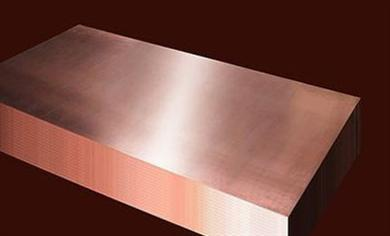
Key takeaways
- ETP copper (C11000) is the standard, cost-effective choice for most switchgear applications.
- OFHC (C10100) offers superior ductility and hydrogen embrittlement resistance for critical components.
- OF copper (C10200) provides similar advantages to OFHC at a slightly lower cost.
- Selection depends on required conductivity, forming complexity, environmental conditions, and budget.
- Use the comparison table to quickly evaluate trade-offs among the three grades.
Which Copper Grade Is Best for Electrical Switchgear?
Selecting the right copper grade for electrical switchgear affects the performance, reliability, and cost of the equipment. The most commonly considered grades are electrolytic tough pitch copper (ETP, UNS C11000), oxygen-free high-conductivity copper (OFHC, UNS C10100), and oxygen-free copper (OF, UNS C10200). Each grade offers a different balance of electrical conductivity, mechanical strength, formability, and corrosion resistance. For most standard switchgear applications, ETP copper provides a combination of high conductivity and moderate cost. When maximum ductility or resistance to hydrogen embrittlement is required, OFHC or OF grades are preferred. The sections below compare the key properties of these three grades to guide selection.
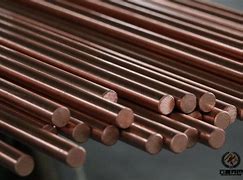
Overview of Common Copper Grades for Switchgear
Electrolytic tough pitch copper (C11000) is the most widely used copper grade for electrical components. It is produced by electrolytic refining, a process detailed in the copper mining and refining overview, and contains a small amount of oxygen (around 0.02–0.04%), yielding good electrical conductivity and moderate mechanical strength. ETP copper is suitable for bus bars, conductors, and switchgear parts that do not require extreme ductility or exposure to reducing atmospheres.
Oxygen-free high-conductivity copper (C10100) is refined to minimize oxygen content to less than 0.0005%. This results in higher ductility, better resistance to hydrogen embrittlement, and virtually no risk of oxide inclusions—a key advantage in the oxygen-free vs standard copper comparison. OFHC copper is used in critical applications such as vacuum interrupters, high-reliability contacts, and components that undergo severe forming or welding.
Oxygen-free copper (C10200) has oxygen content below 0.001% and offers similar advantages to C10100 but with slightly less stringent purity requirements. It is often specified for brazed or welded assemblies where oxide formation could weaken joints. Both OFHC and OF grades provide higher reliability in demanding environments, though at a higher material cost.
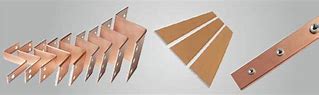
Key Property Comparison of Copper Grades for Switchgear
The following table summarizes the critical differences among the three main copper grades used in electrical switchgear. The comparison covers electrical conductivity, mechanical strength, formability, corrosion resistance, and typical cost, supporting material selection.
| Comparison Aspect | Electrolytic Tough Pitch (C11000) | Oxygen-Free High-Conductivity (C10100) | Oxygen-Free (C10200) |
|---|---|---|---|
| Electrical Conductivity | High (standard grade) | Very high (highest grade) | Very high (near OFHC) |
| Mechanical Strength | Moderate | Moderate to high | Moderate |
| Ductility / Formability | Good | Excellent | Excellent |
| Resistance to Hydrogen Embrittlement | Low (oxygen present) | High (oxygen-free) | High (oxygen-free) |
| Corrosion Resistance | Good in normal environments | Better in reducing/humid conditions | Better than ETP |
| Relative Cost | Lowest | Highest | Moderate |
Application-Specific Selection Considerations
For standard power distribution switchgear, ETP copper (C11000) is usually the most cost-effective choice. Its electrical conductivity is adequate for most bus bar and connector designs, and its mechanical properties meet typical installation requirements. However, if the switchgear will be used in environments with high humidity or corrosive gases, the lower oxygen content of OFHC or OF copper can reduce oxidation risk and improve long-term reliability.
When components require extensive cold forming, bending, or drawing—such as flexible braids or intricate contact shapes—OFHC copper is preferred for its high ductility. Similarly, for vacuum interrupters or sealed assemblies that must withstand hydrogen braze atmospheres, OFHC or OF grades prevent embrittlement failures; a comparison of brass bronze and nickel silver covers alternative copper alloys.
Cost is another major factor. ETP copper is generally the least expensive, while OFHC copper commands a premium. OF copper falls in between. For high-volume or non-critical parts, ETP is often sufficient. For critical switchgear where downtime is unacceptable, the added cost of oxygen-free grades is justified by greater reliability.
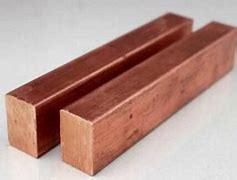
Conclusion: Matching Copper Grade to Switchgear Requirements
Choosing the right copper grade for electrical switchgear requires balancing electrical performance, mechanical demands, environmental conditions, and budget. ETP copper (C11000) remains the standard for most applications. OFHC (C10100) and OF (C10200) are reserved for higher-reliability needs. Evaluating specific requirements of the switchgear design—such as current rating, forming complexity, and operating atmosphere—helps select the grade that delivers optimal performance at the right cost.
Consult material specifications and supplier data sheets for precise values of conductivity, strength, and ductility. This comparison framework guides your selection process.
CopperGroup is a trusted global chemical material supplier & manufacturer with over 12 years experience in providing super high-quality copper and relative materials. The company export to many countries, such as USA, Canada,Europe,UAE,South Africa, etc. As a leading nanotechnology development manufacturer, CopperGroup dominates the market. Our professional work team provides perfect solutions to help improve the efficiency of various industries, create value, and easily cope with various challenges. If you are looking for copper products, please feel free to contact us!