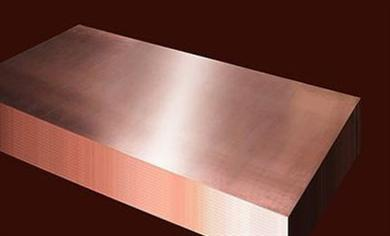
Ever opened a quote for beryllium copper plate and felt your stomach drop? You’re not alone. Many engineers and procurement managers we talk to share the same frustration: the price per kg seems to jump around like a volatile stock. One month it’s affordable, the next it’s through the roof. Let’s get to the bottom of this together. We’ve spent years watching these market shifts, and we’re going to lay out exactly what drives the beryllium copper plate price per kg — so you can plan your next purchase with confidence.
1. The Alloy Grade Showdown: C17200 vs C17510
Not all beryllium copper plates are created equal. The two most common grades — C17200 (UNS C17200) and C17510 (UNS C17510) — have wildly different price tags. Why? Beryllium content. C17200 contains about 1.8–2.0% beryllium, while C17510 holds only 0.2–0.6%. Since beryllium is the expensive ingredient, C17200 commands a premium.
- C17200: Higher strength, higher hardness, but also higher cost. Typical price range: $45–$80 per kg (depending on temper and thickness).
- C17510: Lower strength, better conductivity, more affordable. Typical price range: $30–$55 per kg.
- Many users on Reddit have shared that they over-specified C17200 for applications that didn’t need its extreme strength. Switching to C17510 saved them 20–30% on material costs.
Here’s a quick comparison table to help you decide:
| Property | C17200 | C17510 |
|---|---|---|
| Beryllium content | 1.8–2.0% | 0.2–0.6% |
| Typical price per kg | $45–$80 | $30–$55 |
| Yield strength (annealed) | 200–300 MPa | 140–210 MPa |
| Electrical conductivity | 22–25% IACS | 45–60% IACS |
| Best for | Heavy tooling, springs, high-wear parts | Electrical connectors, welding electrodes |
2. Base Metal Prices: The Beryllium and Copper See-Saw
Think of the beryllium copper plate price per kg as a double-loaded cost structure. You’re paying for two commodities: copper and beryllium. Copper prices follow the London Metal Exchange (LME) — they swing daily. Beryllium, on the other hand, is controlled by a handful of global suppliers (Materion, for example), so its price is less transparent but generally trends upward.
- When LME copper jumps by $0.50/lb, expect your plate price to rise by $1.10–$1.50 per kg.
- Beryllium supply constraints — like mine closures or export restrictions from Kazakhstan — can add $5–$10 per kg overnight.
- We’ve seen a 15–20% increase in beryllium copper plate prices over the last two years, driven mostly by the beryllium side.
3. Supply Chain & Production Costs
Getting from raw ingot to a finished plate is no small feat. Each step adds cost.
- Hot rolling and cold rolling: These processes refine the plate to exact thicknesses. Tighter tolerances mean higher scrap rates and more passes through the mill.
- Heat treatment: Beryllium copper requires solution annealing and age hardening. This takes time and energy — especially for large plates.
- Surface finishing: If you need a polished, de-burred, or coated surface, that adds $3–$8 per kg to the final price.
- One Reddit user noted that a 12mm thick plate they ordered required 3x more rolling passes than a 6mm plate, driving the per kg cost up by 25%.
4. Thickness, Dimensions, and Temper
Thicker plates are not simply scaled-up versions of thin ones. The manufacturing difficulty increases, and so does the price per kg.
- Thickness: Plates under 0.5mm (foil) or over 50mm are specialty items. Expect a premium of 15–40% vs standard 1–10mm plates.
- Dimensions: Custom cut-to-size plates (e.g., 300mm x 600mm) incur laser cutting or sawing costs. These add $5–$12 per piece, but the per kg price stays similar.
- Temper: Annealed (soft) plate is cheaper to produce than quarter-hard (1/4H) or half-hard (1/2H). The tempering process adds $2–$5 per kg.
- We always recommend checking if your application really needs a full-hard temper. Often, a half-hard plate at a lower price works just as well.
5. Beryllium Copper vs Standard Copper Alloys: Is It Worth the Premium?
We get this question a lot. Why pay $50 per kg for beryllium copper when you can get C11000 copper for $10 per kg? It’s a fair point — until you look at performance.
- Strength: Beryllium copper is 3–4x stronger than pure copper. For tooling or structural parts, you can use thinner sections, saving weight and total cost.
- Fatigue resistance: In applications like electrical connectors, beryllium copper lasts 10x longer than phosphor bronze or brass.
- Spark resistance: For oil & gas or mining tooling, beryllium copper is non-sparking — a safety requirement that standard copper can’t meet.
- One case study from a Reddit user in the aerospace industry: They switched from C17200 to C17510 (still beryllium copper) for a non-critical bracket, cutting their per kg cost by 35% while maintaining sufficient strength.
6. Global Demand Hotspots: Aerospace, Oil & Gas, Tooling
When these industries sneeze, the beryllium copper plate price per kg catches a cold. Demand from these three sectors drives the market.
- Aerospace: Landing gear bushings, hydraulic fittings, and instrument housings. When Boeing or Airbus ramp up production, plate prices firm up.
- Oil & Gas: Non-sparking tools, drill bit components, and valve seats. The 2024–2025 boom in deep-water drilling has pushed lead times from 4 weeks to 12 weeks.
- Tooling: Plastic injection mold cores, welding electrodes, and forming dies. The electric vehicle (EV) battery manufacturing boom is creating a new demand wave.
- We saw a 12% price spike in Q1 2025 alone, driven by renewed aerospace orders and constrained beryllium supply.
7. Geographic Sourcing: Direct Mill vs Distributor
Where you buy matters — a lot. We’ve seen price differences of 15–25% between sourcing from a direct mill versus a local distributor.
- Direct mill (e.g., Materion, NGK): Lower base price per kg, but high minimum order quantities (MOQ) — often 500 kg or more. Lead times can be 8–12 weeks.
- Distributor: Higher price per kg (typically +10–20%), but you can buy as little as 10 kg. Stock is often available for immediate delivery.
- Geographic variations: Asian sources (China, South Korea) can offer 10–15% lower prices than Western mills, but you must factor in freight, duties, and quality risks.
- Many Reddit users recommend using a distributor for small prototype runs, then switching to a mill for production volumes.
8. Quantity Discounts and Minimum Order Quantities
Let’s talk numbers. How much can you save by ordering more?
- 1–50 kg: Standard retail price, often $55–$75 per kg for C17200.
- 50–200 kg: Tier 1 discount: 5–10% off. Price drops to $50–$65 per kg.
- 200–1000 kg: Tier 2 discount: 10–20% off. Expect $45–$55 per kg.
- 1000+ kg: Negotiable. You can get mill-direct pricing around $40–$50 per kg.
- But be careful: MOQs for custom thicknesses (e.g., 25mm plate) are often higher. Check with your supplier early.
9. Quality Certifications: ASTM B194 and CDA611
Certifications add cost — but they also add value. If you’re sourcing for critical applications, you can’t skip them.
- ASTM B194: The standard for beryllium copper plate. Certified material costs $3–$8 per kg more than non-certified material.
- CDA611: A common designation for C17200. Compliance ensures traceability and consistent chemistry.
- We’ve seen projects derailed because a supplier provided uncertified material that failed hardness testing. Don’t let a few dollars per kg ruin your timeline.
- Always request a mill test report (MTR) with your order. It’s a small price for peace of mind.
10. Current Trends and Price Volatility Forecast
Where are we headed? We’ve analyzed the data, and here’s what we see.
- Short-term (2025–2026): Beryllium supply is tight. Expect prices to remain elevated, with temporary dips during seasonal lulls (Q4 usually softer).
- Medium-term (2027+ ): New beryllium mining projects in Africa and Canada could increase supply, potentially lowering the beryllium component by 10–15%.
- Copper volatility: LME copper is predicted to stay in the $4.50–$5.50/lb range, adding a baseline fluctuation of ±5% to plate prices.
- We recommend locking in annual contracts with price escalation clauses if you buy regularly. It protects you from sudden spikes.
To wrap it all up, here’s a summary table of the key factors affecting beryllium copper plate price per kg:
| Factor | Impact on Price | Example |
|---|---|---|
| Alloy grade | C17200 vs C17510: 20–40% premium | C17200 at $60/kg vs C17510 at $40/kg |
| Base metal prices | Copper + beryllium: 60% of total cost | LME copper +$0.50/lb = +$1.10/kg |
| Production complexity | Thickness, temper, finishing: +10–30% | 12mm plate vs 6mm: +25% |
| Demand sector | Aerospace/O&G booms: +10–15% | Q1 2025 spike: +12% |
| Supplier type | Direct mill vs distributor: +10–20% | Distributor $55/kg vs mill $45/kg |
| Quantity | 1–50 kg vs 1000+ kg: 20–30% discount | 1000+ kg at $45/kg |
| Certifications | ASTM B194: +$3–$8/kg | Certified $58/kg vs uncertified $52/kg |
We’ve been in the trenches with this material for years. The beryllium copper plate price per kg isn’t a mystery — it’s a combination of alloy choice, market forces, and smart sourcing. Next time you’re putting together a quote, don’t just compare numbers. Compare the whole picture. We’ve helped many teams navigate this complexity. If you want a transparent quote that explains every cost driver, reach out. We’re here to help.
About CopperGroup
CopperGroup is a trusted global chemical material supplier & manufacturer with over 12 years experience in providing super high-quality copper and relative materials. The company export to many countries, such as USA, Canada,Europe,UAE,South Africa, etc. As a leading nanotechnology development manufacturer, CopperGroup dominates the market. Our professional work team provides perfect solutions to help improve the efficiency of various industries, create value, and easily cope with various challenges. If you are looking for copper products, please feel free to contact us!