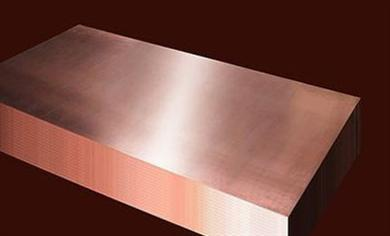
Key takeaways
- Ampacity is a conditional value that depends on ambient temperature, permitted temperature rise, and installation conditions.
- Temperature rise results from resistive heating and is balanced by conduction, convection, and radiation.
- Cross-sectional area, ambient temperature, enclosure, grouping, and surface condition all influence busbar performance.
- The lowest allowable temperature in the assembly usually controls the design.
- Documenting design assumptions makes busbar sizing easier to review and adjust.
What Copper Busbar Ampacity and Temperature Rise Considerations Mean
Copper busbar ampacity and temperature rise considerations describe how much continuous current a copper busbar can carry while its temperature stays within an acceptable limit above the surrounding ambient air. Ampacity is the current-carrying capacity assigned to a busbar under defined conditions; temperature rise is the difference between the busbar's stabilized operating temperature and the ambient temperature around it. The two are linked: current flow produces resistive heating, and the busbar's ability to release that heat determines how far its temperature rises.
In practice, these considerations are not a single fixed number. They are a set of design conditions that include the busbar's cross-sectional area, its surface condition, how it is mounted, how much air can move around it, and the ambient temperature of the installation. A busbar that performs well in open, ventilated air may need to be larger or derated when it is enclosed or grouped with other current-carrying bars.
Evaluating ampacity and temperature rise together keeps the conductor within limits that protect insulation, connections, and nearby components, while still delivering the required current. This article defines the key terms, explains the main factors that influence performance, and outlines how to approach a busbar sizing decision.
| Term or Aspect | Explanation |
|---|---|
| Ampacity | The current-carrying capacity assigned to a copper busbar under stated operating conditions. |
| Temperature rise | The difference between the busbar's stabilized operating temperature and the surrounding ambient temperature. |
| Resistive heating | Heat generated when current flows through the busbar's electrical resistance. |
| Heat dissipation | Heat leaving the busbar through conduction, convection, and radiation. |
| Cross-sectional area | A larger area generally lowers resistance and increases surface area for heat loss. |
| Ambient temperature | A higher ambient temperature typically reduces the allowable current for a given busbar. |
| Installation conditions | Enclosure, airflow, grouping, and orientation affect how effectively the busbar cools. |
| Limiting component | The lowest allowable temperature among insulation, supports, joints, and connected devices controls the design. |
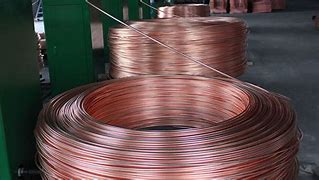
Why Copper Is Used for Current-Carrying Busbars
Copper is a common busbar material because it combines high electrical conductivity with good thermal conductivity. High electrical conductivity means less resistive heating for a given current and cross-section, while good thermal conductivity helps spread heat away from hot spots and toward surfaces where it can be dissipated.
Copper also offers practical fabrication advantages. It can be bent, punched, and drilled, and it accepts plating or surface treatment where a specific contact or corrosion condition requires it. These properties make copper busbars suitable for switchgear, panelboards, battery systems, and industrial power distribution where reliable current transfer matters.
Material choice alone does not determine ampacity. The same copper busbar can behave differently depending on its geometry, orientation, and environment. For that reason, ampacity tables and calculations are always tied to stated conditions rather than to the material in isolation.
How Temperature Rise Is Generated and Dissipated
Temperature rise begins with resistive heating. When current flows through a conductor, the conductor's resistance converts part of the electrical energy into heat. The heat generated per unit length depends on the current squared and the conductor's resistance, so doubling the current increases heating substantially for the same cross-section.
Heat leaves the busbar through three main paths: conduction to connected conductors and supports, convection to the surrounding air, and radiation to nearby surfaces. Convection and radiation depend on the busbar's exposed surface area, its surface finish, and the temperature difference between the busbar and its surroundings. A larger temperature difference drives more heat loss, which is why a busbar tends to stabilize at a temperature where heat generation and heat loss balance.
The stabilized temperature is often called the steady-state temperature. Before that point is reached, the busbar passes through a transient phase in which temperature changes over time. Short-duration overloads may be tolerated differently from continuous loads because the busbar's thermal mass delays the full temperature rise.
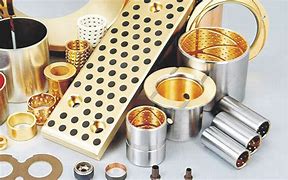
Key Factors That Affect Copper Busbar Ampacity
Cross-sectional area is a primary factor. A larger cross-section lowers resistance and increases surface area, both of which tend to reduce temperature rise for a given current. Busbar cross-sections are commonly rectangular, and the ratio of width to thickness affects how surface area and heat transfer are distributed.
Ambient temperature sets the starting point for temperature rise. If the surrounding air is already warm, the busbar reaches a given absolute temperature with less additional rise, so the allowable current is typically reduced. This is why ampacity values are usually stated for a specific ambient temperature and a specific maximum permitted temperature rise.
Installation conditions matter as much as the busbar itself. Busbars mounted in open air with free convection cool more effectively than busbars enclosed in a cabinet or bundled in a group. Nearby heat sources, restricted airflow, and the presence of other loaded conductors can all raise the local ambient temperature or reduce heat removal.
Surface condition and plating can influence radiative and convective heat loss, and they also affect contact resistance at joints. Poorly prepared or oxidized joints can become local hot spots even when the busbar body itself is adequately sized. Orientation also plays a role: a vertical busbar and a horizontal busbar can have different convection behavior because the boundary layer along the surface develops differently.
Finally, the allowable temperature limit is not set by the copper alone. It is often governed by the insulation, supports, enclosure materials, or connected devices that must survive the operating temperature. The lowest relevant limit in the assembly usually controls the design.
How Ampacity and Temperature Rise Are Evaluated Together
A practical evaluation starts by defining the operating conditions: continuous current, ambient temperature, maximum permitted busbar temperature, installation geometry, and the presence of enclosures or grouping. These conditions determine which ampacity reference or calculation method is appropriate.
Next, the designer compares the required current against the ampacity available under those conditions. If the required current exceeds the available ampacity, options include increasing the cross-section, improving ventilation, reducing the ambient temperature, changing the mounting arrangement, or splitting the current across multiple bars.
Temperature rise is then checked against the limiting component in the assembly. The goal is not simply to keep copper below a generic temperature, but to keep every part of the current path within its own allowable limit. Connections, plating, insulation, and nearby equipment all participate in that limit.
Verification may involve calculation, reference tables, or measurement under representative conditions. Because real installations vary, the assumptions used in any evaluation should be documented so that the result can be reviewed if the installation conditions change.
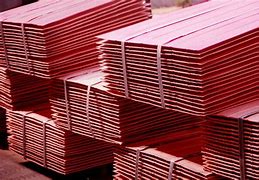
Common Design Conditions and Their Effect on Busbar Sizing
Open-air installations generally allow higher current for a given cross-section because heat can leave the busbar more freely. Enclosed installations typically require derating because the enclosure restricts airflow and may trap heat from other components.
Grouped busbars present a similar issue. When several current-carrying bars run close together, each one heats the air around the others, and the group as a whole may run hotter than a single isolated bar. Spacing, barriers, and orientation can change how strongly this effect appears.
Short-term overloads are a separate condition from continuous ampacity. A busbar may tolerate a higher current briefly because its thermal mass slows the temperature rise, but the duration and frequency of such events must be considered against the same temperature limits.
Altitude, contamination, and corrosive environments can also affect performance. Reduced air density at high altitude changes convective cooling, while contamination or corrosion can alter surface emissivity and joint resistance. These conditions are usually handled by adjusting assumptions or by selecting a more conservative design.
Practical Takeaways for Copper Busbar Selection
Treat ampacity as a conditional value, not a universal property of copper. Always identify the ambient temperature, permitted temperature rise, mounting method, and enclosure conditions behind any ampacity figure before applying it.
Size for the weakest thermal limit in the assembly. The busbar, its joints, its insulation, and its supports should all be checked against their own allowable temperatures.
When conditions are uncertain, choose a more conservative cross-section or improve cooling rather than relying on an optimistic assumption. Documenting the design conditions makes later review and modification easier.
For applications where copper busbars are being specified, it is reasonable to request material and dimensional information that matches the intended installation, so that ampacity and temperature rise can be evaluated against the actual operating environment.
Frequently asked questions
Is copper busbar ampacity a fixed number?
No. Ampacity depends on stated conditions such as ambient temperature, permitted temperature rise, mounting arrangement, and airflow. A value without those conditions is not directly applicable to a specific installation.
What causes temperature rise in a copper busbar?
Current flowing through the busbar's resistance generates heat. The busbar's temperature rises until heat loss through conduction, convection, and radiation balances the heat being generated.
Why does enclosure or grouping affect busbar sizing?
Enclosures and grouped conductors restrict airflow and can raise the local ambient temperature, which reduces the busbar's ability to dissipate heat and may require a larger cross-section or derating.
What limits the maximum operating temperature of a busbar?
The limit is usually set by the lowest-temperature component in the assembly, such as insulation, supports, joints, or connected devices, rather than by the copper conductor alone.
CopperGroup is a trusted global chemical material supplier & manufacturer with over 12 years experience in providing super high-quality copper and relative materials. The company export to many countries, such as USA, Canada,Europe,UAE,South Africa, etc. As a leading nanotechnology development manufacturer, CopperGroup dominates the market. Our professional work team provides perfect solutions to help improve the efficiency of various industries, create value, and easily cope with various challenges. If you are looking for copper products, please feel free to contact us!