The Night I Lost $12,000 on a Copper Rod Deal
It was a Tuesday. I got a call from a buyer in Germany. “The rods arrived,” he said. His voice was flat. “They’re corroded. And the diameter is wrong.” That shipment cost me $12,000 in rework and lost trust. We all learn the hard way. The real kicker? The price FOB looked unbeatable. But the price wasn’t the problem. The FOB terms were. Since then, I’ve sourced over 5,000 metric tons of copper rod. I’ve made every mistake—and fixed them. This article is about saving you that $12,000 phone call.
1. First, Understand What FOB Actually Means for Copper Rod
FOB stands for Free On Board. Simple, right? Not quite. For copper rod, FOB means the seller loads the goods onto a ship you nominate. Once it passes the ship’s rail, the risk and cost shift to you. The best copper rod exporter price FOB might look cheap, but if the port is inefficient or the loading terms aren’t clear, you’ll pay double.
What the FOB Price Covers (and What It Doesn’t)
Here’s a quick breakdown of what’s included versus what’s not in a standard FOB quote for copper rod:
| Included in FOB Price | Not Included (Buyer’s Cost) |
|---|---|
| Ex-works cost of copper rod | Ocean freight |
| Domestic transport to port | Marine insurance |
| Export customs clearance | Import duties and taxes |
| Loading charges onto vessel | Port handling at destination |
| Documentation (bill of lading, packing list, certificate of origin) | Inland transport from destination port to your warehouse |
Many users on Reddit have shared horror stories about unclear FOB terms. One buyer thought the price included marine insurance. It didn’t. A container tipped over in a storm. They lost everything. Always ask: “What is EXACTLY included in your FOB price for copper rod?”
2. Step 2: Understand the Key Price Determinants
You cannot negotiate the best copper rod exporter price FOB without knowing what drives the number. It’s not random. Four factors dominate.
2.1. LME Copper Price (The Base)
Every supplier starts with the LME (London Metal Exchange) copper price. This is the global benchmark. In 2024, it fluctuated between $8,000 and $9,500 per metric ton. If an exporter quotes you a price fixed for 30 days, they might be hedging or taking a risk. Ask for a formula: LME cash settlement + a premium. That premium is where negotiation happens.
2.2. Rod Diameter and Purity (99.9% vs. 99.99%)
Common diameters for export are 8mm, 12.7mm, and 20mm. The most in-demand purity is 99.9% (C11000, ETP grade). Need 99.99% (C10100, OFHC)? Expect a 10-15% premium. Why? Because OFHC requires vacuum melting. The table below shows the price impact for a typical order of 20 metric tons.
| Grade | Purity | Typical Application | Price Premium (vs. C11000 base) |
|---|---|---|---|
| C11000 (ETP) | 99.9% | Electrical wire, busbars | Base |
| C10100 (OFHC) | 99.99% | High-end electronics, audio cables | +12% to +18% |
| C10200 (OF) | 99.95% | Medical devices, cryogenics | +5% to +8% |
2.3. Processing Costs (Temper and Cut Length)
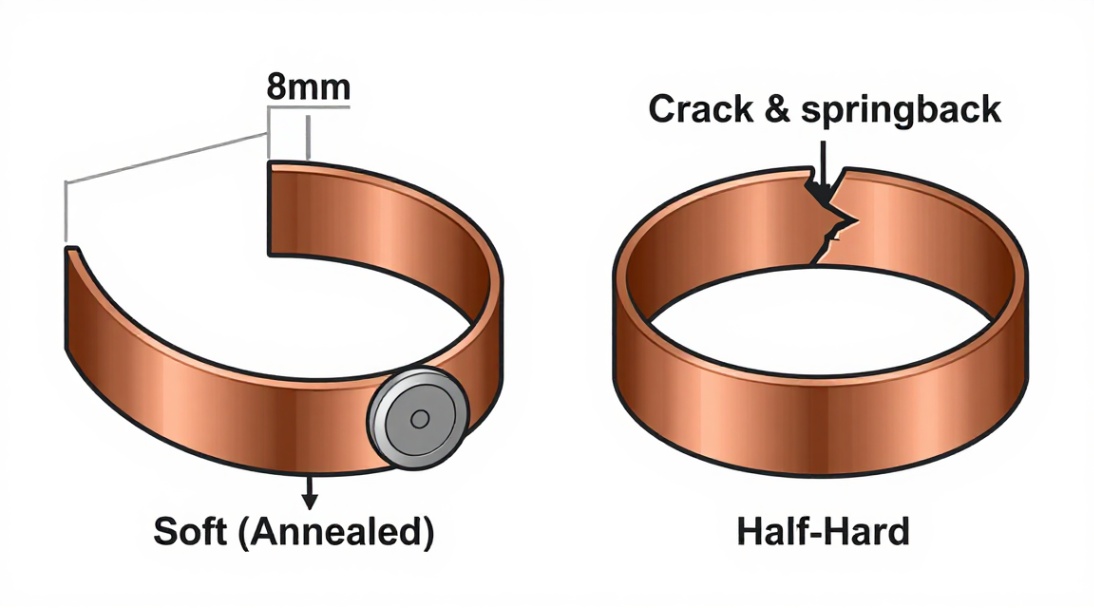
Do you need half-hard or soft annealed rod? Half-hard requires controlled drawing and stress relief. That adds $50–$100 per ton. Custom cut lengths (e.g., 5.8 meters instead of standard 6 meters) increase scrap and cost. Stick to standard lengths unless you must customize.
2.4. Quantity (Volume Discounts)
Exporters love containers. A full 20-foot container holds about 22–25 tons of 8mm copper rod. A 40-foot container holds roughly 26–28 tons. If you order less than a full container load (LCL), expect a surcharge of $150–$300 per ton. Order a full container, and you’ll get the best copper rod exporter price FOB.
3. Step 3: Verify Certifications Before You Get Burned
I’ve seen invoices claiming “ASTM B187” but the rod fails inspection. Always ask for a Mill Test Certificate (MTC) with every shipment. If they hesitate, walk away.
Must-Have Certifications for International Copper Rod Export
- ASTM B187 – Standard Specification for Copper, Bus Bar, Rod, and Shapes (most common).
- EN 13601 – European equivalent for copper rod.
- ISO 9001:2015 – Quality management system certification for the factory.
- CE Marking – Required for importing into the EU.
- Certificate of Origin – Needed for customs clearance and tariff preference.
One Reddit user described receiving a shipment of “copper rod” that was actually brass. The MTC was fake. The supplier had no traceability. The buyer lost $35,000. Don’t be that person. Ask for a third-party inspection (like SGS or Bureau Veritas) before loading. Cost? About $500 per container. Worth every penny.
4. Step 4: Compare Exporter Quotes Like a Pro
When three exporters send you a quote, don’t just look at the unit price. Use this comparison table to level the playing field.
| Criteria | Exporter A (Cheapest) | Exporter B (Mid-Price) | Exporter C (Highest) |
|---|---|---|---|
| Unit Price FOB ($/ton) | $8,450 | $8,750 | $9,100 |
| MOQ (Metric Tons) | 5 tons | 20 tons (full container) | 10 tons |
| Lead Time (after L/C) | 30 days | 15 days | 20 days |
| Incoterms Clarity | “FOB port of loading” | “FOB Shanghai Incoterms 2020” | “FOB Ningbo, includes loading” |
| Quality Certifications | MTC only | ASTM B187 + CE + MTC | ASTM B187 + EN 13601 + SGS inspection report |
| Payment Terms | 100% T/T in advance | 30% T/T, 70% L/C at sight | L/C at sight or documentary collection |
Exporter A looks great. But 100% T/T in advance? That’s a red flag. Exporter B has a better lead time and acceptable payment terms. Exporter C offers the best documentation and inspection, but at a price. For new buyers, I recommend Exporter B or C. Once you have a relationship, you can negotiate better terms.
5. Step 5: Master the Logistics and Documentation

Documents You Must Have Before the Shipment Sails
- Bill of Lading (B/L) – The title to the goods. Ensure it’s a “clean on board” B/L without exceptions.
- Commercial Invoice – Must include the FOB value, LME base, and premium breakdown.
- Packing List – Exact weight per bundle, number of bundles, and seal numbers.
- Certificate of Origin – Required for preferential tariff rates. Get it from the local chamber of commerce.
- Mill Test Certificate – From the manufacturer, showing chemical composition and mechanical properties.
- Phytosanitary Certificate – If the wooden packaging is not heat-treated (ISPM 15 standard).
- Insurance Certificate – You buy this; the seller doesn’t provide it under FOB.
6. Step 6: Choose the Right Payment Terms
Payment terms are a trust instrument. There are two primary methods for copper rod export transactions:
- Letter of Credit (L/C) – The bank guarantees payment. Preferred for new relationships. Cost: 0.5% to 1.5% of the L/C value. Ensure it is “irrevocable” and “confirmed” by a bank in your country.
- Telegraphic Transfer (T/T) – Many Asian exporters want 30% upfront and 70% before shipment. This exposes you to risk. Negotiate for 30% upfront and 70% against a scanned copy of the B/L.
One experienced buyer on Reddit summarized it perfectly: “L/C for first orders, T/T for repeat orders with a trusted supplier.” That’s the rule I follow.
7. Step 7: Don’t Underestimate Packaging
I learned this the hard way (remember the $12,000 corrosion story?). Copper rod oxidizes quickly during sea freight. Salt air accelerates corrosion. Here’s the standard for export-grade packaging:
- Steel Strapping – Bundles of rods must be secured with steel straps. Plastic strapping breaks during handling.
- VCI Paper – Volatile Corrosion Inhibitor paper should be wrapped around each bundle. It prevents tarnish and oxidation.
- Shrink Wrap – A final layer of heavy-duty shrink wrap seals out moisture.
- Plywood Crates – For smaller bundles or premium-grade rod. Cost: $20–$30 per ton.
- Marking – Each bundle must have a label with: copper grade, diameter, temper, bundle weight, and heat number.
If an exporter offers to ship rod wrapped only in a tarpaulin, run. That is not export-grade packaging.
8. Step 8: Know Your Customs Classification and Tariffs
The HS Code for copper rod is typically 7407.10.00. However, tariffs vary by country. For example:
- EU – 0% duty for unwrought copper? No. Rod is classified as semi-finished. Duty is about 2.5% to 5% depending on the origin.
- USA – Section 232 tariffs on steel and aluminum? Copper is generally exempt, but keep checking. Rates change. In 2024, the tariff on refined copper rod was 1% for most countries.
- India – Import duties can be 7.5% plus additional social welfare surcharge.
Always engage a customs broker before you finalize the FOB deal. They can calculate the exact landed cost. That little detail can shift your margin by 5%.
9. Step 9: Where to Source (Without Getting Ripped Off)
The majority of the world’s copper rod is produced in Asia and the Middle East. Here’s a quick guide to the regions and what they offer.
| Region | Typical Premium (vs. LME) | Quality Level | Risk Factor |
|---|---|---|---|
| China (Shanghai/Ningbo) | +$150 to +$250/ton | Good to excellent (many certified mills) | Moderate (IP protection, communication barriers) |
| South Korea (Busan) | +$200 to +$300/ton | Excellent (consistent quality, advanced mills) | Low |
| Malaysia (Port Klang) | +$180 to +$250/ton | Good (some mills not certified) | Moderate |
| UAE (Jebel Ali) | +$200 to +$280/ton | Good to excellent | Low (good infrastructure) |
Chinese exporters often offer the most competitive best copper rod exporter price FOB. But vet your supplier carefully. Use Alibaba’s Verified Supplier program at a minimum. Better yet, fly to a trade show like Wire Düsseldorf or Canton Fair to meet them in person.
10. Step 10: Use Market Trends to Time Your Purchase
Copper rod pricing is volatile. In early 2024, we saw LME copper at $8,200. By mid-year, it hit $9,500. That’s a 15% swing. A few rules I follow:
- Don’t chase the market. If prices are rising rapidly, wait for a pullback. Suppliers will offer discounts to move inventory.
- Consider long-term contracts. If you buy regularly, negotiate a price formula linked to the monthly LME average minus a discount.
- Track supply chain disruptions. Strikes at Chilean mines or production cuts in Zambia affect global supply. Use resources like Fastmarkets or Metal Bulletin for real-time data.
Several Reddit users in the “Copper Traders” subreddit have pointed out that the market is currently oversupplied with rod from China. That means margins for exporters are thin. Use that leverage. Ask for a discount on the premium. You might get $20–$50 per ton off just by asking.
Your Next Move (No Hard Sell)
We’ve walked through the entire process: FOB definitions, LME pricing, certifications, quote comparison, logistics, payment terms, packaging, customs, and market timing. You now have a repeatable system to find and secure the best copper rod exporter price FOB.
Here’s what I want you to do next. Download this checklist. Send it to three exporters. Compare their responses using the table in Step 4. If any of them can’t provide a clear MTC and packaging details, cross them off. Your first deal should be small—5 to 10 tons. Prove the process works. Then scale up.
I’ve been where you are. I’ve felt the sting of a bad deal. But with this framework, you’ll avoid the $12,000 mistakes. Now go get that quote.
About CopperGroup
CopperGroup is a trusted global chemical material supplier & manufacturer with over 12 years experience in providing super high-quality copper and relative materials. The company export to many countries, such as USA, Canada,Europe,UAE,South Africa, etc. As a leading nanotechnology development manufacturer, CopperGroup dominates the market. Our professional work team provides perfect solutions to help improve the efficiency of various industries, create value, and easily cope with various challenges. If you are looking for copper products, please feel free to contact us!