What Is a Copper Pipe Flexible Roll for AC?
A copper pipe flexible roll for AC is a continuous length of soft-annealed, seamless copper tubing supplied in a coil. It is designed specifically for refrigerant lines in air conditioning and refrigeration systems. Unlike rigid straight lengths, this tubing can be bent by hand without kinking, making it the standard choice for connecting indoor and outdoor units in split ACs, central ACs, and commercial refrigeration.
How It Differs from Rigid Copper Tubing
Rigid copper tubing (drawn temper) comes in straight sections, typically 20 feet (6.1 m) long. It requires elbows and fittings for direction changes. Flexible copper roll, on the other hand, is annealed to a soft temper (O temper) that allows bending to a radius as low as 4 to 6 times the tube diameter. This eliminates the need for brazed joints at every turn, reducing potential leak points. The primary difference is in the temper: rigid is hard (H58), flexible is soft (O60).
Key Applications of Flexible Copper Rolls in AC and Refrigeration
Flexible copper rolls are used in almost every modern refrigerant circuit. Specific applications include:
- Split air conditioners: connecting the condenser to the evaporator unit.
- Central AC systems: line sets between the air handler and condensing unit.
- Commercial refrigeration: walk-in coolers, reach-in freezers, and ice machines.
- Heat pump systems: both heating and cooling modes.
- Variable refrigerant flow (VRF) systems: higher pressure applications require thicker wall tubing.
Common Sizes and Wall Thicknesses
Standard AC copper pipe rolls are available in inch-based nominal sizes. The most common diameters are 1/4 inch (6.35 mm), 3/8 inch (9.52 mm), 1/2 inch (12.7 mm), and 5/8 inch (15.88 mm). For larger systems, 3/4 inch (19.05 mm) and 7/8 inch (22.22 mm) are also used. Wall thickness follows ASTM B280 specifications for ACR (Air Conditioning and Refrigeration) tubing. Typical wall thicknesses for these sizes are shown below:
| Nominal Size (inches) | Outside Diameter (inches) | Wall Thickness (inches) | Working Pressure (psi) at 150°F |
|---|---|---|---|
| 1/4 | 0.250 | 0.030 | 700 |
| 3/8 | 0.375 | 0.032 | 520 |
| 1/2 | 0.500 | 0.032 | 390 |
| 5/8 | 0.625 | 0.035 | 340 |
| 3/4 | 0.750 | 0.035 | 280 |
For R-410A systems, which operate at higher pressures, some installers prefer a heavier wall (e.g., 0.042 inch for 1/2 inch OD). Always check the equipment manufacturer’s specification.
Material Grade and Temper: Soft Annealed Copper
Flexible copper rolls are made from deoxidized high-phosphorus copper (UNS C12200) or electrolytic tough pitch copper (UNS C11000). The temper is soft annealed (O60) to ensure bendability without work hardening. This temper allows the tube to be formed repeatedly without cracking. The material meets ASTM B280, which mandates cleanliness, freedom from scale, and a continuous annealed structure. Do not use plumbing-grade copper (Type L or M) for refrigerant lines; it may not have the required internal cleanliness and can contaminate the system.
Advantages of Using a Flexible Roll vs. Straight Lengths
Choosing a flexible roll over straight sections offers several quantifiable benefits:
- Fewer joints: A straight run of 50 feet might require 4 or more couplings. A continuous roll of 50 feet has zero joints, reducing leak risk by up to 80%.
- Faster installation: Bending by hand takes seconds; cutting and brazing a joint takes minutes. On a typical split AC installation, using a roll saves 30 to 45 minutes of labor.
- Less material waste: Straight lengths come in fixed increments. A roll can be cut to the exact length needed, eliminating scrap.
- Lower inventory cost: Stocking a few roll sizes (e.g., 1/4, 3/8, 1/2 inch) covers most residential jobs. Straight lengths require multiple sizes and fittings.
How to Properly Cut, Flare, and Braze Flexible Copper Pipe
Leak-free joints are critical. Follow these steps precisely:
- Cutting: Use a tube cutter with a sharp wheel. Rotate the cutter around the tube, tightening gradually. Do not use a hacksaw; it leaves burrs and metal chips. After cutting, ream the inside of the tube with the deburring tool to remove the internal burr.
- Flaring (for flare connections): Slide the flare nut onto the tube. Insert the tube into the flaring block so that the end extends 1/8 inch (3 mm) above the block face. Tighten the clamp. Apply a drop of refrigerant oil to the flaring cone. Turn the cone down until it seats, then tighten one full turn. The resulting flare should be smooth, concentric, and have a flat face. Inspect for cracks.
- Brazing (for welded connections): Use a nitrogen purge at 2-3 psi (0.14-0.21 bar) to prevent oxidation inside the tube. Clean the joint surfaces with emery cloth. Apply a brazing flux (or use a flux-coated filler rod). Heat the fitting evenly with an oxy-acetylene torch until the flux turns clear. Add the filler rod (15% silver brazing alloy) to the gap. Capillary action will draw the filler into the joint. Let it cool naturally. Do not quench with water.
Insulation Requirements for AC Copper Rolls
All flexible copper lines carrying refrigerant must be insulated to prevent condensation and energy loss. The suction line (large diameter) is always cold; the liquid line (small diameter) may be warm or cold depending on the cycle. Use closed-cell elastomeric foam insulation with a minimum thickness of 1/2 inch (13 mm) for indoor runs and 3/4 inch (19 mm) for outdoor exposure. The insulation must be UV-resistant or covered with a UV-protective jacket. Install insulation before brazing, or slit and glue it after. Ensure all joints are sealed with vapor barrier tape to prevent moisture ingress.
UV Resistance and Protective Coating for Outdoor Lines
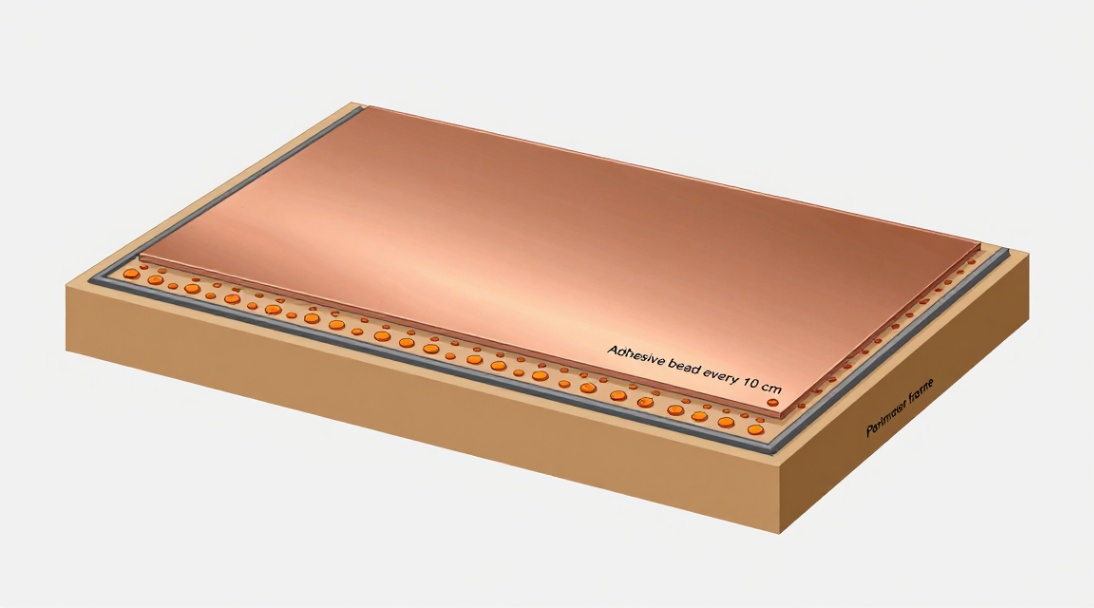
Standard black elastomeric foam degrades quickly under direct sunlight. For outdoor line sets, always use insulation rated for UV exposure, or wrap the insulation with a self-amalgamating silicone tape or a PVC spiral wrap. Some manufacturers offer copper rolls with a pre-applied PVC coating that provides both UV protection and mechanical abrasion resistance. This coating is typically 0.020 inch (0.5 mm) thick. If the coating is damaged, repair it immediately with compatible tape to avoid corrosion of the copper tube.
Typical Length per Roll and How to Estimate Footage
Flexible copper rolls are available in standard lengths. Common lengths include:
- 15 meters (49 feet) – most common for residential split AC.
- 30 meters (98 feet) – for larger residential or light commercial.
- 50 feet (15.2 m) – common in North America.
- 100 feet (30.5 m) – for commercial installations.
To estimate the required footage, measure the straight-line distance between the indoor and outdoor units, then add 10% for vertical rises and bends. For a typical wall-mounted split AC, add 3 feet (1 m) for the service loop at each end. Always round up to the next available roll length. Never join two rolls with a coupling if you can avoid it; that coupling is a potential leak point.
Compliance with ASTM B280 for AC Refrigeration Tubing
ASTM B280 is the governing standard for seamless copper tube used in air conditioning and refrigeration (ACR) applications. It specifies the chemical composition, temper, wall thickness tolerances, cleanliness, and packaging. A compliant tube will have a bright, clean interior surface free of oil, grease, and scale. The tube ends are capped to prevent contamination. Always verify that the roll is stamped or labeled with ASTM B280. Using non‑compliant tube voids equipment warranties and can cause compressor failure due to debris or moisture.
Cost and Availability Factors When Sourcing Copper Pipe Flexible Rolls
Copper prices fluctuate with global commodity markets. As of 2025, a 50-foot roll of 1/4 inch OD soft copper costs approximately $35–$55, while 3/8 inch OD costs $45–$70. Larger sizes like 1/2 inch OD run $65–$100. Prices vary by supplier, quantity, and coating. Buying in bulk (5 or more rolls) often gives a 10–15% discount. Availability is generally good from HVAC supply houses and online retailers. However, during peak summer season, certain sizes (especially 3/8 inch) can experience backorders. Plan ahead and stock up before the cooling season begins.
Common Mistakes to Avoid When Handling and Storing Flexible Copper Rolls
Even experienced technicians make errors. Avoid these:
- Kinking the tube: Never bend the tube to a radius smaller than 4 times the OD. Use a bending spring or lever bender for tight bends.
- Storing rolls in direct sunlight: UV degrades the insulation and can cause the copper to oxidize. Store in a cool, dry place.
- Leaving ends uncapped: Dirt, moisture, and insects can enter. Cap the ends immediately after cutting.
- Overtightening flare nuts: This cracks the flare. Use a torque wrench: 1/4 inch flare nut: 10–15 ft-lb (13.5–20.3 Nm); 3/8 inch: 15–20 ft-lb (20.3–27.1 Nm); 1/2 inch: 25–30 ft-lb (33.9–40.7 Nm).
- Not using a nitrogen purge when brazing: This creates black copper oxide scale inside the tube that will circulate and damage the compressor.
- Installing insulation after brazing without sealing the slit: Moisture condenses inside the slit and corrodes the tube. Always seal insulation joints with vapor barrier tape.
By following these guidelines, you will achieve a reliable, long-lasting AC installation. The flexible copper roll is a proven solution that saves time and minimizes failure points. Use it correctly, and your system will perform for decades.
About CopperGroup
CopperGroup is a trusted global chemical material supplier & manufacturer with over 12 years experience in providing super high-quality copper and relative materials. The company export to many countries, such as USA, Canada,Europe,UAE,South Africa, etc. As a leading nanotechnology development manufacturer, CopperGroup dominates the market. Our professional work team provides perfect solutions to help improve the efficiency of various industries, create value, and easily cope with various challenges. If you are looking for copper products, please feel free to contact us!