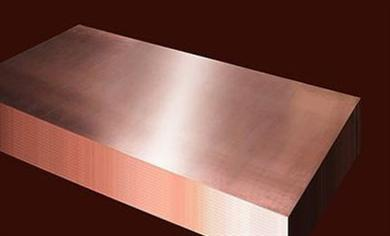
1. Are you using the wrong copper grade for your 5mm busbar rod?
We see it all the time. Someone grabs a generic copper rod without checking the grade. For busbar connections, you need C11000 (electrolytic tough pitch copper) or better yet, C10100 (oxygen-free). C11000 gives you minimum 100% IACS conductivity. That’s the industry standard. Using a lower grade? You’ll get higher resistance, more heat, and potential failure. Don’t risk it. Always demand ASTM B187 compliance.
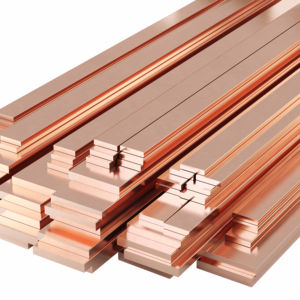
2. Forgetting to account for thermal expansion? That’s a disaster waiting to happen.
Copper expands when it gets hot. A 5mm round rod might seem small, but under load, it can grow. If you don’t leave expansion loops or proper spacing, you’ll get mechanical stress. Joints loosen. Arcs happen. We’ve seen panels melt because someone ignored this. Always calculate the thermal expansion for your specific run length. Use flexible connections where needed.
3. Bending your 5mm round rod too tightly? Stop right now.
Round rod is great for routing – you can bend it around corners. But there’s a limit. The minimum bend radius should be at least 2 times the diameter for cold bending. For 5mm rod, that’s 10mm radius. Go tighter? You’ll work-harden the copper, create micro-cracks, and increase resistance. Use a proper bender or heat it carefully. Don’t just force it with pliers. We’ve seen that mistake too many times.
4. Ignoring corrosion? Your busbar will fail in harsh environments.
Standard copper rod corrodes in humid or industrial settings. If you’re using it for outdoor grounding or in a chemical plant, you need tinned copper rod. Tinning adds a protective layer. It prevents oxidation and maintains conductivity. Don’t assume bare copper is fine. We recommend tinning for anything outside a climate-controlled switchgear. Also, keep dissimilar metals away – use bimetal washers to avoid galvanic corrosion.
5. What about current carrying capacity? Don’t guess.
A 5mm round copper rod has a certain ampacity. At 25°C ambient, it can handle roughly 80-100 amps depending on insulation and spacing. But at higher temperatures, derate. If you push more current, the rod heats up. That’s a fire risk. Use ampacity charts from the Copper Development Association. Don’t rely on ‘it worked before’. Every installation is different. We’ve seen 5mm rods used for 200A circuits – that’s a recipe for disaster.
6. Drilling holes in the wrong place? Weakens the rod.
Need to connect your 5mm rod to a terminal? Don’t drill too close to the end. The edge distance should be at least 1.5 times the hole diameter. Otherwise, the rod tears under torque. Also, drill bits that are dull cause burrs. Burrs create high-resistance spots. Clean the hole and use a chamfer tool. We always recommend using a drill press with a sharp bit.
7. Sourcing cheap 5mm copper rod online? Beware of purity scams.
The market is full of ‘copper’ rods that are actually copper-clad aluminum or low-grade alloys. They look the same. But they don’t perform. You need 99.9% pure copper. Always ask for a mill test certificate. Check the ASTM B187 spec. If a supplier can’t provide it, walk away. We’ve seen entire busbar systems fail because of counterfeit material. Don’t be that person.
8. What’s the best way to install 5mm round busbar? Follow these tips.
Use proper supports every 300mm. Keep the rod away from steel panels – induced currents can cause heating. Use insulated standoffs. For joints, use Belleville washers to maintain pressure over temperature cycles. And always torque to the manufacturer’s spec. Overtightening cracks the rod. Undertightening creates resistance. We recommend a torque wrench.
9. Final warning: Don’t skip the safety check.
After installation, measure the resistance across each joint. Use a micro-ohmmeter. Anything above 0.1 milliohm indicates a problem. Also, do a thermal imaging scan under load. Hot spots mean trouble. We’ve seen too many fires that could have been prevented with a simple test.
If you want to avoid these mistakes, we’ve got you covered. We supply premium C11000 and C10100 5mm round copper rod, cut to your exact length, with mill certificates. Don’t risk your project with cheap material. Order your copper rod today and get the peace of mind that comes with ASTM-certified quality.
About CopperGroup
CopperGroup is a trusted global chemical material supplier & manufacturer with over 12 years experience in providing super high-quality copper and relative materials. The company export to many countries, such as USA, Canada,Europe,UAE,South Africa, etc. As a leading nanotechnology development manufacturer, CopperGroup dominates the market. Our professional work team provides perfect solutions to help improve the efficiency of various industries, create value, and easily cope with various challenges. If you are looking for copper products, please feel free to contact us!